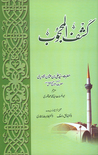
This is a book review of هشت شرائط حضرات خواجگان نقشبندیه written originally in Persian language in 1915; Translated in Urdu as Maamoolat e Hazraat e Naqshbandiya.
“The secrets of Islam as we come to know from Quran and Ahaadees e Mubaarika, also called soul of Islam is Spiritualism or Mysticism of Islam; In addition to the physical being immersed in Islam, the soul or heart must also be in accordance to Deen e Islam in order to achieve full Islam. Hence the beauty of Islam is: it teaches not only the body but also the soul to serve Allah. That is, while performing physical deeds one must not forget the spiritual part of it. An example is, while you go in Sajdah your head touches the floor before Allah, wherein your heart must also touch it (do it with love and remembrance by heart of Allah.)
Another good example is whilst you perform a good deed, your heart must have true niyyat of it that you are doing it for Allah alone. Plus you should have no brag in heart.
Hence, serving through and purification of both heart and soul (zaahir and baatin) is taught in Islam i.e. Mysticism of Islam.
Apart from this it teaches how with your soul and heart you long for Allah, your Beloved Creator. To live such a beautiful life you follow 11 principles of a spiritual life. In this book first 8 (expanded to 11) are discussed according to Naqshbandi Golden Chain starting from Prophet Saww. The Prophet Saww teaches all lifestyle and passes on secrets and Faiz to Sahaba r.a. (His saww Companions). This book briefly tells about such 8 (expanded to 11) Golden Rules derived from Prophet saww’s teachings.:-
1. Hosh dar dam — awareness of breathing (every breath and beat in Allah’s Zikr/Zikr e Qalbi)
2. Nazar bar kadam — watching over the steps
3. Safar dar watan — travelling to the Homeland (to one’s own self to find Allah)
4. Khilwat dar anjuman — retirement in company (alone even in crowd/ Heart remembering Allah)
5. Yad kardan — remembering, recollecting exercises
6. Baaz gasht — restraint from Ghaflat (forgetting Allah) and also bad deeds
7. Nigah dasht — watchfulness, use of special faculties (Heart sees what’s invisible to eye)
8. Yad dashtan — keeping of the memory, sensing of the being and the body
9. Wuqoof-e zamani — time-halt
10. Wuqoof-e adadi — number-halt
11. Wuqoof-e qalbi — heart-halt or visualisation
The book was first published in 1915 in Persian language, earlier official language of Islamic World second to Arabic; translated to Urdu and other languages (I don’t know if available in English too, however similar books are easily available in English and several other languages.)
I personally enjoyed it reading it in one night, it’s pure Urdu and the fact that Urdu is nearer to Arabic and Persian, thus reading Tasawwuf/Spiritualism of Islam in Urdu gives me immense pleasure and taste. Hope you enjoy it in your own selected language to suit your taste.”
Wasalam
Dr Muhammad Ahsen Tahiri